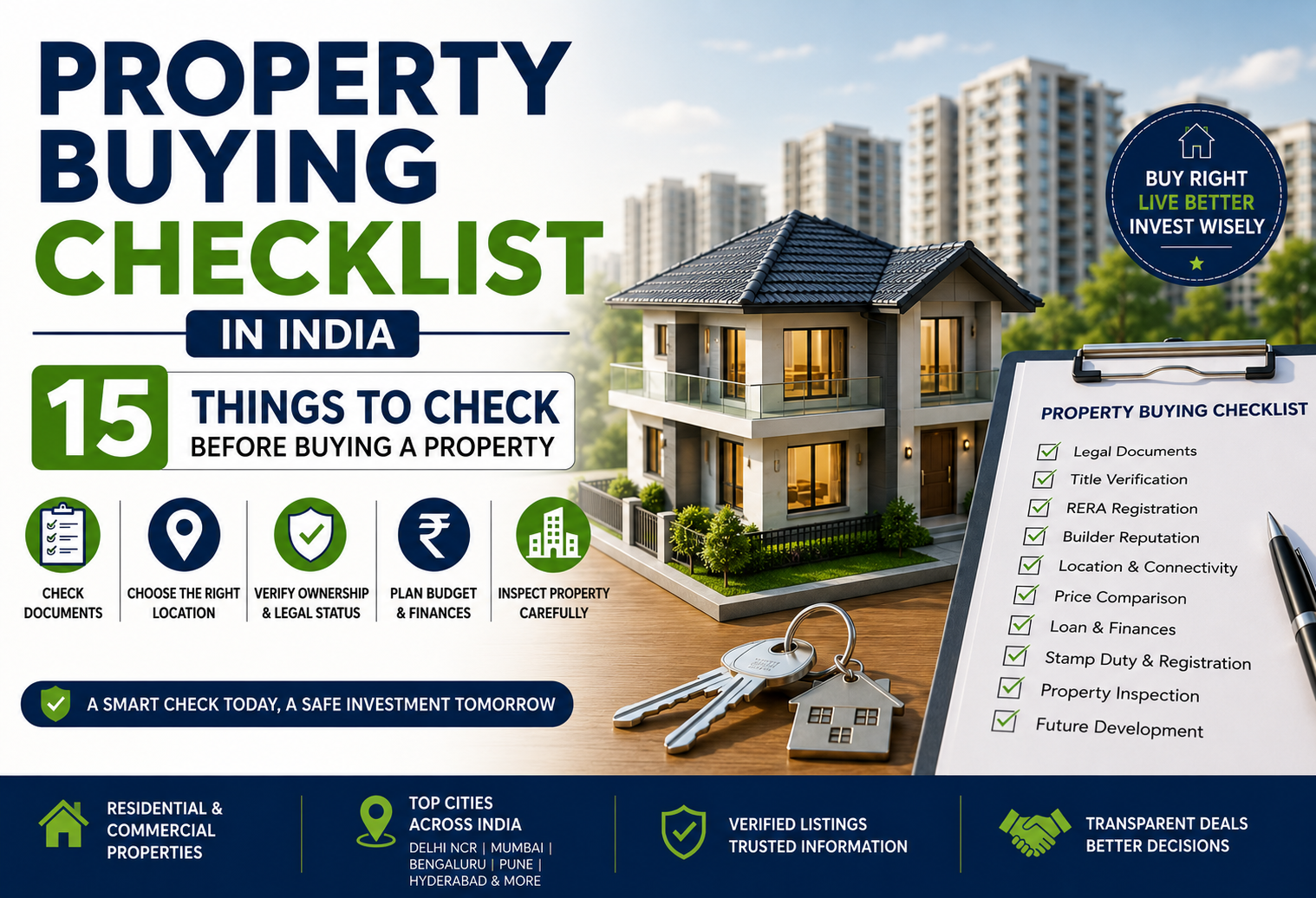
Buying a property is one of the biggest financial decisions most people make. Whether you are purchasing your first home, an apartment, a plot, or commercial property, understanding how to buy property in India and following a proper property buying checklist can help you avoid costly mistakes.
India has a diverse real estate market, with major property markets such as Delhi NCR, Mumbai, Bengaluru, Hyderabad, Pune, Chennai, Kolkata, Ahmedabad and Jaipur. Property prices, property documents, registration procedures and local regulations can vary across states and locations.
That is why having a proper property buying checklist in India is important before you make a final decision. If you are a first-time buyer, read our complete guide on How to buy property in india to understand the property buying process step by step.
This guide covers 15 important things to check before buying a property, from budget and location to title verification, property documents, RERA information, physical inspection and registration.
Important: Property laws, government charges and documentation requirements can vary by state and property type. For a significant transaction, buyers should verify the applicable requirements with the relevant authority and consider professional legal advice.
1. Set Your Total Property Budget
Before searching for a property, determine how much you can realistically afford.
Your property budget should not be limited to the advertised sale price. Depending on the transaction, you may also need to account for:
- Down payment
- Home loan costs
- Stamp duty
- Registration charges
- Legal verification
- Brokerage, where applicable
- Maintenance or society charges
- Interior and renovation expenses
- Parking or other applicable charges
For example, someone searching for property in Noida should compare the total acquisition cost of different properties rather than looking only at the quoted price.
A realistic budget helps you shortlist properties without putting unnecessary financial pressure on yourself.
2. Choose the Right Location
Location is one of the most important factors in real estate.
Before buying a property, research:
- Road connectivity
- Metro and public transport
- Schools and colleges
- Hospitals
- Shopping and daily conveniences
- Employment hubs
- Existing infrastructure
- Planned infrastructure
- Neighbourhood environment
- Accessibility
Location requirements can differ depending on your purpose.
A family buying a home may prioritize schools and hospitals, while an investor may focus more on connectivity, employment hubs, rental demand and long-term market conditions.
Whether you are considering property in Mumbai, flats in Bengaluru, property in Hyderabad or residential property in Delhi NCR, research the specific locality rather than evaluating the city as a whole.
3. Verify Property Ownership and Title
One of the most important steps in property verification in India is confirming ownership.
Before paying a substantial amount, verify:
- Who owns the property
- Whether the seller has authority to sell it
- Previous ownership records
- Relevant title documents
- Whether there are multiple owners
- Whether any legal issues affect the ownership
Do not rely only on verbal assurances or property advertisements.
A qualified property lawyer can review the relevant documents and help identify potential title-related concerns.
4. Check for Encumbrances and Existing Liabilities
A property may have financial or legal obligations that buyers should investigate before purchasing.
Depending on the property, checks may include:
- Existing loans or mortgages
- Outstanding dues
- Claims
- Disputes
- Court-related matters
- Other encumbrances
The exact records and process can differ across Indian states.
This is one reason professional due diligence is valuable before completing a major property transaction.
5. Verify All Important Property Documents
Documentation should be treated as a core part of your property buying checklist.
Depending on the property and location, relevant documents may include:
- Title documents
- Sale deed
- Previous ownership records
- Property tax records
- Approved plans
- Applicable permissions
- Completion-related documents
- Occupancy-related documents, where applicable
- Society or association records
- Other applicable approvals
The document requirements for a flat, plot, independent house and commercial property may be different.
Never assume that documentation is correct simply because the property is being marketed by a seller or developer.
6. Check Applicable RERA Information
If you are purchasing a project covered by applicable RERA requirements, check the project's registration and available information through the relevant state RERA authority.
RERA information can help buyers review publicly available details about applicable projects and developers.
This can be particularly useful when researching new residential projects in markets such as:
- Noida and Greater Noida
- Gurugram
- Mumbai
- Pune
- Bengaluru
- Hyderabad
- Chennai
Always verify project information through the relevant official state authority rather than relying solely on promotional material.
7. Research the Builder or Developer
If you are purchasing from a developer, research their track record.
Look at:
- Previous projects
- Delivery history
- Construction quality
- Customer feedback
- Applicable registrations
- Project information
- Maintenance standards
- Relevant legal or regulatory information
A property's brochure may highlight amenities and features, but the developer's past performance can also be an important part of your decision-making process.
8. Compare Property Prices
Never assume that the first quoted price is the correct market price.
Compare similar properties in the same locality based on:
- Carpet area
- Property age
- Floor
- Location
- Amenities
- Parking
- Construction quality
- Condition
- Connectivity
For example, if you are looking for flats for sale in Pune, compare similar properties within comparable localities instead of comparing completely different markets.
Understanding the local real estate market in India can help you evaluate whether the asking price deserves further negotiation.
9. Check Carpet Area and Other Measurements
For apartments and residential properties, understand exactly what area is being offered.
Ask for clarity regarding:
- Carpet area
- Built-up area
- Common areas
- Balcony area, where applicable
- Plot area for land
- Parking arrangements
Don't compare properties only on the basis of a headline area figure.
Two properties with similar advertised areas may offer significantly different usable spaces.
10. Physically Inspect the Property
Online listings are useful for shortlisting, but they should not replace an actual property visit.
During your inspection, check:
- Construction quality
- Walls and ceilings
- Flooring
- Plumbing
- Electrical fittings
- Water supply
- Ventilation
- Natural light
- Doors and windows
- Parking
- Lifts and common areas
- Surrounding roads
- Neighbourhood
For an under-construction property, compare the current progress with the applicable project information and approved plans.
11. Research Infrastructure and Future Development
Infrastructure can influence both usability and demand for real estate.
Research:
- Roads
- Highways
- Metro connectivity
- Railway connectivity
- Airports
- Business districts
- IT and employment hubs
- Schools
- Hospitals
- Shopping facilities
For example, buyers considering property investment in Bengaluru may examine employment corridors and connectivity, while someone looking at property in Delhi NCR may consider metro, expressways and major employment hubs.
However, don't purchase a property solely because someone promises that a future infrastructure project will increase its value.
Verify important claims through reliable sources.
12. Calculate Home Loan and Other Financing Costs
If you need financing, understand your affordability before finalizing the property.
Compare:
- Loan amount
- Interest rate
- Loan tenure
- EMI
- Processing charges
- Other applicable costs
- Total repayment
A property that looks affordable based on its sale price may become expensive when financing and other purchase costs are included.
13. Understand Stamp Duty and Registration Charges
Property purchases can involve government charges such as applicable stamp duty and registration charges.
These charges and procedures can vary by:
- State
- Property type
- Transaction
- Buyer category
- Applicable local rules
For example, the applicable charges for a property transaction in Maharashtra may differ from those in Uttar Pradesh, Karnataka, Telangana or Delhi.
Before completing the transaction, check the latest applicable requirements with the relevant state authority or a qualified professional.
14. Read the Sale Agreement Carefully
Before signing a sale agreement, carefully review the terms.
Pay attention to:
- Buyer and seller details
- Property description
- Total price
- Payment schedule
- Possession terms
- Parking
- Included facilities
- Cancellation conditions
- Default clauses
- Other agreed obligations
Important terms should be documented clearly rather than depending on verbal promises.
If you are unsure about a legal clause, get professional advice before signing.
15. Secure Your Property Documents After Purchase
After completing the transaction, keep your important documents organized and secure.
These may include:
- Registered sale deed
- Registration documents
- Payment receipts
- Loan documents
- Tax records
- Possession documents
- Property approvals
- Society documents
- Other transaction records
Maintain secure digital backups where appropriate, while also protecting original documents.
Final Property Buying Checklist
Before finalizing your property purchase, ask yourself:
- Is the property within my budget?
- Have I researched the location?
- Have I verified ownership?
- Have the relevant documents been checked?
- Have I checked applicable RERA information?
- Have I investigated potential liabilities?
- Have I compared similar property prices?
- Have I physically inspected the property?
- Have I calculated all applicable purchase costs?
- Have I reviewed the sale agreement?
- Have I taken professional advice where necessary?
Conclusion
Buying property in India should never be a rushed decision. From property for sale in Delhi NCR to apartments in Mumbai, Bengaluru, Hyderabad, Pune or other Indian cities, every property requires location-specific and transaction-specific due diligence.
The right approach is simple:
Research → Compare → Verify → Inspect → Review → Decide
A well-planned property purchase can help you avoid unnecessary risks and make a decision that better matches your financial and personal goals.
If you are looking for residential or commercial property in India, explore listings on DealAndDeeds and compare properties according to your preferred location, property type and budget.
Disclaimer: This article is intended for general informational purposes and should not be treated as legal, financial or investment advice. Property laws, taxes, government charges and documentation requirements may change and can vary by state and transaction. Verify current requirements with the relevant government authority and consult a qualified professional before making a property purchase.
Frequently Asked Questions
Question1. What is the most important thing to check before buying property in India?
Answer: There is no single check that applies to every transaction. Buyers should evaluate the property's ownership, title, documents, legal status, location, physical condition, price and total purchase cost.
Question2. What documents should I check before buying a property?
Answer: The documents depend on the property and location. Commonly reviewed documents include title records, sale deed, ownership records, tax records and applicable approvals.
Question3. Should I verify RERA information?
Answer: For projects covered by applicable RERA requirements, checking the relevant state RERA information is an important part of due diligence.
Question4. Is a property lawyer necessary?
Answer: For a major property purchase, professional legal review can help identify potential issues in ownership, title and documentation.
Question5. How can I find properties for sale in India?
Answer: Property listing platforms such as DealAndDeeds can help buyers discover properties based on location, property type, budget and other preferences.


